
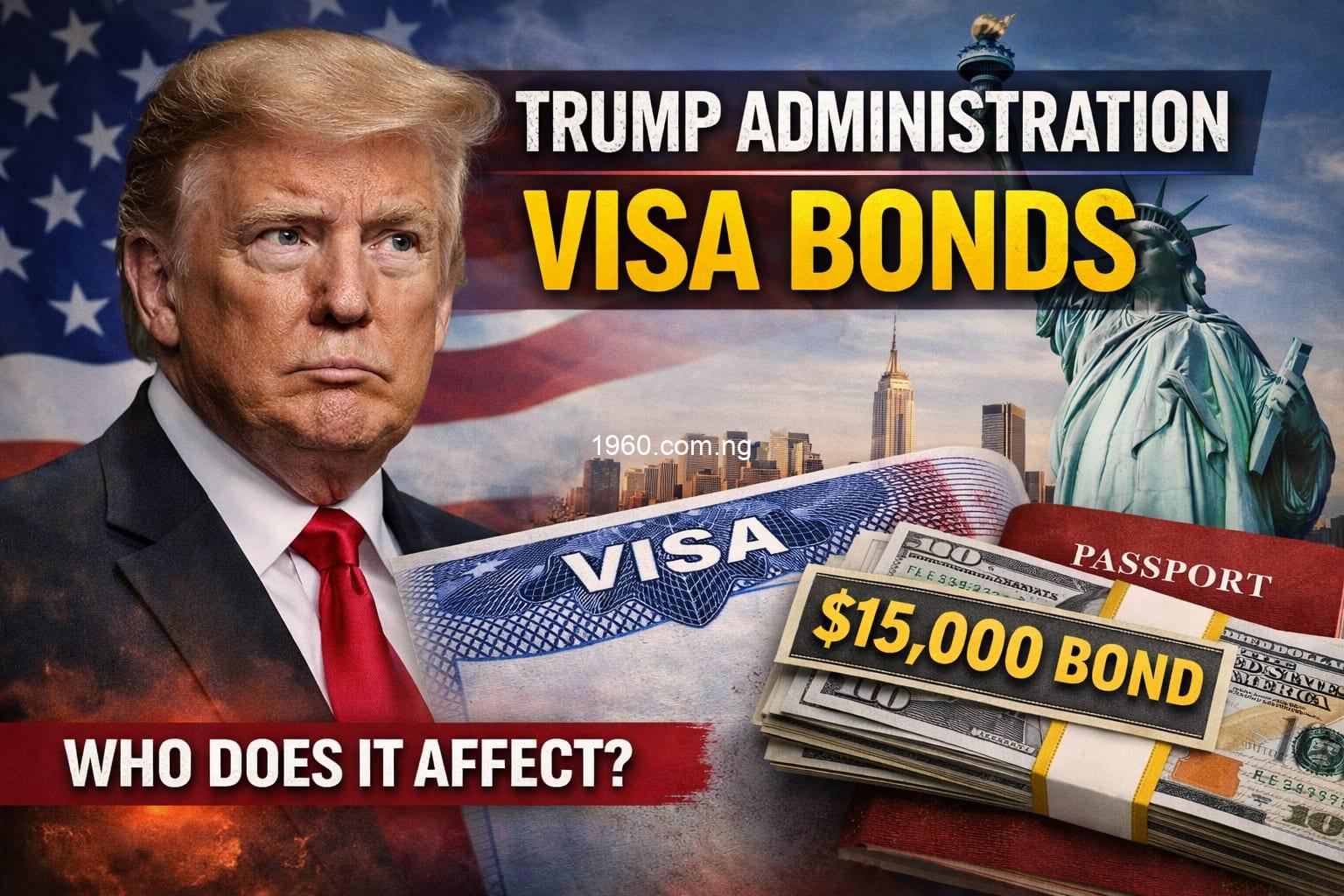
Washington insists it is merely tidying up the plumbing of its immigration system. Others see something closer to a diplomatic surcharge. From January 21st 2026, Nigerians seeking short-term business or tourist visas to the United States may be required to lodge a refundable bond of up to $15,000, enter and exit through just three American airports, and submit to heightened scrutiny that applies regardless of where they apply. Nigeria is not alone; 37 other countries are caught in the net, but its inclusion carries particular geopolitical weight.
The policy, authorized under Section 221(g)(3) of America’s Immigration and Nationality Act, is officially a pilot scheme designed to deter visa overstays. The logic is technocratic: where compliance is weak, money sharpens incentives. Pay a bond; follow the rules; get your money back. Overstay or attempt to change status and the bond is forfeited. From the perspective of the Department of Homeland Security, it is a neat solution to an old problem.
Yet diplomacy is rarely neat. Nigeria is Africa’s most populous country, one of America’s largest sources of African students, professionals and diaspora remittances, and a strategic partner on security in West Africa. Treating its middle-class travelers as latent absconders carries political symbolism far beyond the balance sheet of overstays.
The sums involved are not trivial. At prevailing exchange rates, $15,000 is well over ₦20m—more than many Nigerians earn in several years. Even a $5,000 bond represents a formidable barrier to legitimate travel for conferences, family visits or exploratory business trips. The requirement to funnel all arrivals through JFK, Dulles or Boston Logan adds cost and inconvenience, particularly for travelers whose final destinations lie elsewhere in America.
America’s defense rests on data. Overstay rates, it says, are higher among certain nationalities; verification and document-security challenges persist; enforcement has lagged. That may all be true. But the selective nature of the list—mixing small island states with large emerging economies—invites suspicion that blunt instruments are being used where scalpel work would do.
History offers a warning. Visa regimes have a habit of hardening into symbols of status. Countries placed in the “high-risk” category rarely accept the label with equanimity. Nigeria has already endured reduced visa validity and single-entry restrictions in recent years, also framed as reciprocity. The cumulative effect is to turn routine mobility into a test of national prestige.
For now, Abuja has responded cautiously, avoiding public confrontation. But reciprocity is the quiet grammar of international travel. If Nigeria were to impose bonds, narrow entry points or additional scrutiny on American visitors, the numbers affected might be smaller—but the message would be unmistakable. Visa policy, like tariffs, rarely remains unilateral for long.
America risks misjudging leverage. Nigerians denied or deterred from travelling to the United States do not cease travelling altogether; they redirect—to Britain, Canada, the Gulf or Europe. Universities, conference centers and airlines notice. So do rivals happy to absorb talent and goodwill. The bond scheme may well reduce overstays at the margin. Whether it strengthens America’s standing with one of its most important African partners is far less certain.